Aspirin, Heart Disease and Young India:
Could One Tiny Tablet Help Save Millions?
If you ask almost any adult in India what aspirin does, the answer comes fast: “It thins the blood.”
That answer is familiar. It is also incomplete.
Aspirin is one of the most recognized medicines in the world, yet one of the most misunderstood. For people who have already had a heart attack, brain stroke, angioplasty, or have known coronary artery disease, aspirin remains one of the strongest pillars of secondary prevention. In these patients, its benefits are proven, repeated, and widely accepted. Source
But the real debate begins earlier — before the first heart attack, before the first stroke, before the first emergency rush to the cath lab.
And in India, that debate deserves a very different lens.
Why the Western guideline story does not fully fit the Indian reality
Major Western guidelines such as the USPSTF and the ACC/AHA have moved away from recommending routine aspirin for primary prevention, especially in older adults. Why? Because with age, the risk of gastrointestinal bleeding, intracranial bleeding, and hemorrhagic stroke begins to catch up with — and in some people exceed — the cardiovascular benefit. The USPSTF specifically recommends against initiating aspirin for primary prevention in adults 60 years or older, while saying the decision in adults 40 to 59 with elevated cardiovascular risk should be individualized. Source
The ACC echoes the same caution: low-dose aspirin may be considered only in select adults aged 40 to 70 years who are at higher ASCVD risk and not at increased bleeding risk, and it should not be used routinely in adults over 70 or in anyone with elevated bleeding risk. Source
That is sound medicine.
But it is not the whole story for India.
The Crisis of Premature Heart Disease in India
India gets heart disease younger — much younger
Cardiovascular disease in Indians does not follow the same timeline seen in many Western populations. Indians develop heart disease at least a decade earlier than people of European ancestry. The median age of first myocardial infarction in South Asians has been reported at about 52 years, compared with 62 years in Europeans. In India, 52% of cardiovascular deaths occur before age 70, versus only 23% in Western populations. Source
The numbers are even more alarming when you look at younger adults. A review on premature coronary artery disease in Indians reported that heart disease strikes Indians 5–10 years earlier than many other populations, that about 25% of acute myocardial infarctions occur before age 40, and that over half of CVD-related deaths occur below age 50. Source
This is not just a cardiology issue. It is an Indian family issue.
It is a productivity issue.
It is an economic issue.
And for millions living with diabetes, abdominal obesity, borderline blood pressure, low HDL, high triglycerides, insulin resistance, or a family history of heart disease, it is a ticking clock issue. Source
The High Stakes for Indians Living with Diabetes
Why this matters even more for Indians with diabetes
In South Asians, diabetes shows up earlier too — roughly 10 years earlier than in Caucasian populations. The same review notes that in Asian Indians, half of all heart attacks occur before age 50 and one quarter before age 40. Source
That means many Indians are entering their 30s and 40s carrying a dangerous combination of:
- insulin resistance
- diabetes or prediabetes
- abdominal obesity
- high triglycerides
- low HDL cholesterol
- mild hypertension
- strong family history
These are exactly the people who often look “not sick enough” — until one day they are. Source
In such patients, the aspirin conversation becomes more relevant, not less.
The key question: can preventive aspirin help the younger high-risk Indian adult?
Here is where the nuance matters.
For an older adult in the West, routine aspirin may offer little net benefit because the bleeding risk rises sharply with age. But for a younger Indian adult with multiple metabolic and cardiovascular risk factors, the balance may look different. The bleeding risk is generally lower in younger adults, while the burden of premature heart disease in India is substantially higher and begins earlier. Western guidelines themselves base much of their caution on age and bleeding risk, which means the conversation cannot be identical for a 68-year-old low-risk adult and a 42-year-old Indian with diabetes, hypertension, central obesity, and a family history of early heart attack. Source
That does not mean everyone should take aspirin.
It means more Indians should be asking whether they are the right person for it.
Is Preventive Aspirin Right for the Younger High-Risk Indian?
Why low-dose aspirin remains biologically compelling
The Biological Logic of Low-Dose Aspirin
Low-dose aspirin, typically 75 or150 mg daily, is used because it effectively suppresses platelet thromboxane activity — the pathway that promotes clot formation — while minimizing broader prostaglandin effects compared with higher doses. The ACC specifically refers to 75–100 mg as the low-dose range used in primary prevention discussions. Source
Mechanistic studies have shown that low-dose aspirin can suppress thromboxane generation while having relatively less effect on systemic prostacyclin activity, which is one reason low-dose strategies became standard in cardiovascular prevention. Source
Studies have also shown that enteric-coated aspirin can achieve antiplatelet effects similar to plain aspirin at low dose, offering an alternative for all patients who need better gastric tolerability — though the decision about formulation should still be individualized by the treating doctor. Source
So yes, the tiny tablet is not so tiny in its logic.
For Indians, prevention cannot begin after the first heart attack
India cannot afford a prevention model that waits for catastrophe.
If the first sign of disease is a blocked artery, a stent, a stroke, or sudden death in the 40s, we are intervening too late. In a country where diabetes and heart disease arrive early, preventive conversations also have to begin early. Source
That includes diet.
That includes weight loss.
That includes blood pressure control.
That includes glucose control.
That includes statins when indicated.
And in selected people, that may also include low-dose enteric-coated aspirin.
Not as a magic bullet.
Not as self-medication.
But as one carefully chosen part of a larger prevention strategy.
A Precision Medicine Update: Aspirin and Colorectal Cancer
A surprising new angle: aspirin and colorectal cancer
There is another reason aspirin is back in the headlines.
A major recent randomized trial — the ALASCCA trial, published in the New England Journal of Medicine in 2025 — found that aspirin significantly reduced recurrence in a specific subgroup of colorectal cancer patients: those with PI3K-pathway altered localized colorectal cancer after surgery. Patients with stage II–III colon cancer or stage I–III rectal cancer carrying these mutations who took 160 mg aspirin daily for 3 years had a markedly lower recurrence rate, with hazard ratios suggesting roughly about 50% lower recurrence risk in the biomarker-defined groups studied. Source
That is a major development — but it is also a precision medicine story, not a blanket public-health instruction.
A large Cochrane review has simultaneously cooled enthusiasm for aspirin as a general colorectal cancer prevention pill for the average-risk public. It found no meaningful reduction in colorectal cancer within the first 15 years, while confirming increased risks of serious extracranial bleeding and probable hemorrhagic stroke. Source Source
The message is clear:
Aspirin may be powerful for the right patient. It is not a free-for-all for everyone.
So who should actually think about preventive aspirin?
This is where the Indian conversation needs maturity instead of slogans.
If you are a young or middle-aged Indian adult with:
- diabetes or prediabetes
- borderline or high blood pressure
- central obesity
- abnormal cholesterol or triglycerides
- a strong family history of early heart attack or stroke
- smoking history
- multiple metabolic risk factors
then preventive aspirin may be a conversation worth having with your doctor — especially if your bleeding risk is low. The decision should be based on your total cardiovascular risk, kidney function, gastrointestinal history, ulcer risk, concurrent medications, and bleeding history. Source
This is the most important line in the entire article:
Do not self-prescribe. Ask your doctor whether preventive aspirin is appropriate for you.
Because aspirin is not a vitamin.
It is not harmless.
It is not for everybody.
But for the right Indian patient, started at the right time, it may be one of the most affordable preventive tools in medicine.
The bottom line (Diabetesandobesityclinic.com)
India is facing a silent epidemic of early diabetes, early artery damage, early heart attacks, and early strokes. We cannot keep importing a one-size-fits-all prevention strategy from older Western populations and applying it blindly to younger high-risk Indians.
Aspirin should not be romanticized.
Aspirin should not be demonized.
Aspirin should be personalized.
For patients who have already had a cardiac event, aspirin remains a cornerstone. For younger high-risk Indians — especially those with diabetes, metabolic syndrome, or premature cardiovascular risk — the question is not whether aspirin is universally good or bad.
The real question is:
Could preventive aspirin be right for you, before disaster strikes?
And that is a conversation worth having now — not in the ICU.
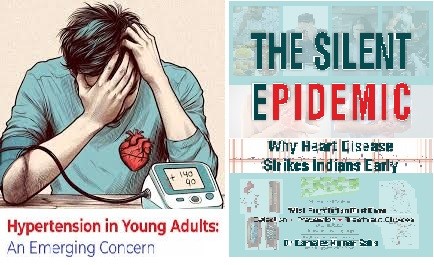
Author's Note: This article highlights the "silent" nature of heart disease in our country. For a deeper dive into the specific protocols and strategies needed to combat this crisis, refer to my latest book: The Silent Epidemic: Free in Kindle for limited time
Medical Disclaimer
This content is for educational purposes only and is not a substitute for professional medical advice. Individuals with existing medical conditions or high cardiovascular risk should consult their healthcare provider before starting any new exercise routine.
ARTICLE AUTHOR
Dr Kamales Kumar Saha
Clinician–Leader · Cardiac Surgeon· Preventive Cardiologist · IICA-Certified Independent Director, Author : The Silent Epidemic
Dr Kamales Kumar Saha is a seasoned Clinician–Leader with boardroom judgment, combining deep expertise in cardiac surgery and preventive cardiology with strategic healthcare leadership. His work bridges clinical excellence and patient education— helping patients make informed, sustainable health decisions.
Copyright Notice
© 2026 Dr Kamales Kumar Saha. All rights reserved.
No part of this blog may be reproduced, stored in a retrieval system, or transmitted in any form or by any means: electronic, mechanical, photocopying, recording, or otherwise without the prior written permission of the author, except for brief quotations used in reviews or scholarly references. This book is intended for personal reading only and may not be redistributed, resold, or reproduced in any format without permission.